
In the age of complex interconnectedness, graph databases have emerged as a transformative force that propels the future of connected data infrastructure. With the ability to efficiently model and query relationships between vast amounts of data points, graph databases offer unparalleled insights, enabling organizations to uncover hidden connections and drive innovative solutions. In this comprehensive article, we explore the intricacies of graph databases, their significance, implementation strategies, and real-world applications that are reshaping the landscape of connected data.
Understanding Graph Databases and Their Power
Graph databases are designed to capture and represent relationships between data points, making them particularly suited for scenarios where connections are as important as the data itself. Unlike traditional relational databases, which excel at structured data, graph databases excel at storing and querying highly interconnected data, making them ideal for scenarios like social networks, recommendation systems, fraud detection, and knowledge graphs.
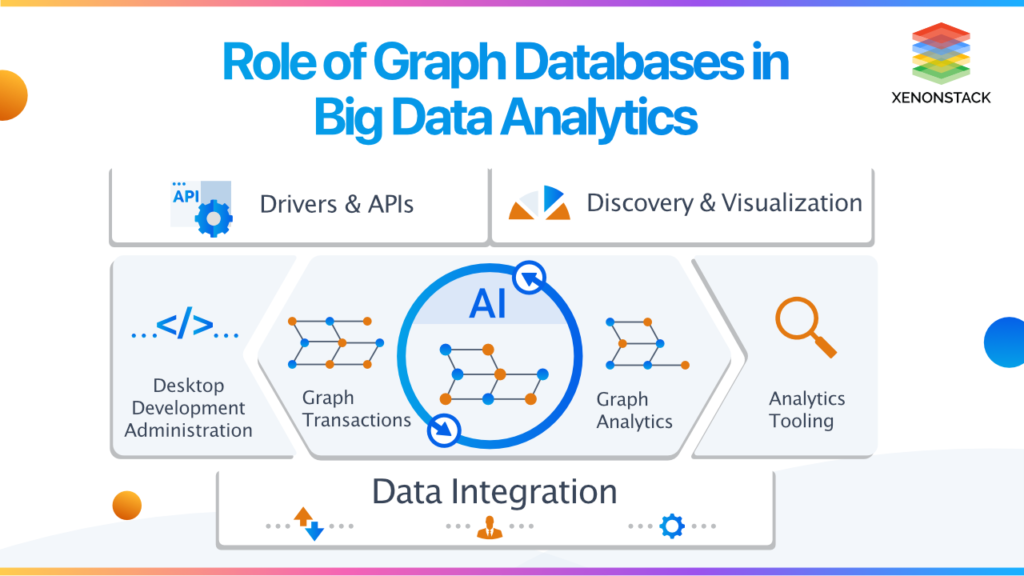
The Power of Connected Data
Graph databases excel at representing and querying complex relationships, enabling organizations to uncover insights that may remain hidden in other types of databases. This ability to navigate and analyze connections between entities is driving the adoption of graph databases across various industries.
Key Features of Graph Databases
- Nodes and Edges: In graph databases, data points are represented as nodes, and the relationships between them are represented as edges. This structure allows for easy traversal and querying of connected data.
- Flexibility and Schema-less Design: Graph databases offer flexibility by not enforcing a rigid schema, allowing data models to evolve as new relationships are discovered.
- Graph Algorithms: Graph databases often come equipped with built-in graph algorithms that enable advanced analytics and pattern detection.
Benefits of Graph Databases in Connected Data Infrastructure
- Efficient Relationship Management: Graph databases excel at modeling and querying relationships, providing efficient and intuitive ways to explore connections between data points.
- Scalability: Graph databases are designed to handle highly interconnected data, making them scalable and performant even as the amount of data grows.
- Real-Time Insights: The ability to traverse relationships quickly makes graph databases well-suited for real-time applications where timely insights are crucial.
Implementing Graph Databases in Connected Data Infrastructure
- Identify Use Cases:
Determine scenarios in your data infrastructure where relationships play a critical role. Common use cases include social networks, recommendation engines, fraud detection, and knowledge graphs.
- Data Modeling:
Design the graph schema that represents entities and their relationships. Define node types, edge types, and properties.
- Data Import:
Import data into the graph database by creating nodes and edges based on the defined schema. Many graph databases support various data import formats.
- Query Language:
Learn the query language of the chosen graph database. Graph query languages allow you to traverse and query relationships efficiently.
- Indexing and Optimization:
Optimize performance by creating indexes on frequently queried properties and relationships. Tune database settings for optimal query execution.
Real-World Applications
Graph databases are transforming connected data infrastructure across various industries, driving innovation and insights.
1. Social Networks:
Graph databases power social networking platforms, enabling users to connect, share, and interact based on intricate relationships.
2. E-Commerce:
E-commerce platforms utilize graph databases for personalized product recommendations based on user behavior and purchase history.
3. Fraud Detection:
Graph databases aid in fraud detection by uncovering patterns and relationships between seemingly unrelated data points.
4. Healthcare:
Graph databases facilitate patient data management and medical research by representing complex medical relationships and treatment pathways.
Embrace the Graph-Powered Future
As the world becomes more interconnected, the role of graph databases in shaping the future of connected data infrastructure cannot be underestimated. By harnessing the power of relationships, organizations can unlock insights, drive innovation, and deliver impactful solutions that reshape industries and drive meaningful change.

The Mango Flows Editorial Team is committed to creating accurate, insightful, and reader-focused content across business, technology, AI, marketing, finance, and digital innovation. Every article is carefully researched using trusted sources to ensure quality, transparency, and reliability for our readers.